Get a locksmith quote before work: what to insist on
 A1 Super Locksmith Services
Why you should insist on a written quote before work starts
If you want to get a locksmith quote before work, start by insisting on it in writing. A written quote gives you something concrete to compare and keeps the scope of the job clear; oral estimates can lead to surprise bills when the technician describes extra tasks once work is underway. The plan for this page highlights that a written estimate protects homeowners, renters, drivers and small businesses from unexpected charges and makes the offer comparable between different providers.
A short, signed or dated estimate fixes what the locksmith is offering to do and what they consider extra, which matters when there is pressure to authorise work on the spot. When a price is only spoken, it is easy for the definition of the job to shift between the call, arrival and completion, and that is the precise situation a written quote avoids. Use the document to check whether the quoted job will use non‑destructive methods first or whether irreversible methods such as drilling are likely to be listed as a possible extra.
If you are comparing emergency call‑out offers from different providers, the estimate shows the full charge and the separate items that add up to that number, which is the only way to make a fair comparison under time pressure.
What a clear locksmith quote must show
A clear quote turns a price into a promise about what will be done and what will be billed separately. Use this checklist to make different offers meaningful and comparable.
-
A plain description of the work to be carried out and the methods proposed, including whether non‑destructive entry will be attempted first and what would trigger drilling or irreversible work. The planning notes for this topic single out non‑destructive versus irreversible methods as a major thing customers need to understand before they agree to work.
-
A breakdown between labour and parts rather than a single lump sum, so you can see which elements are driving the price. Line items let you compare quotes when one includes parts but another does not.
-
Any attendance, call‑out or response fee shown separately from the price for labour and parts. The research brief and competing pages highlight that call‑out and attendance charges are a frequent reason quotes differ, and listing them makes comparisons fair.
-
An estimated time on site or an arrival window tied to the quote, and whether time on site is charged as part of labour. For emergency calls you will have to judge response time against total cost, and a quote that names an arrival window does the work of comparison for you.
-
A list of the parts or materials that will be fitted and how replacements will be priced if the technician finds additional damage. Quotes that name the parts avoid a later surprise when a technician says a different part is needed.
-
Clear payment terms: how you will be asked to pay, whether a deposit is required, and when the balance is due. The plan for this article says terms should be in the quote so you are not negotiating payment while a job is in progress.
-
A validity period for the quote or a date so you know how long the offer stands. A dated estimate prevents creeping charges later should the locksmith claim the price has changed.
-
A contact name and a quote or job number so the document can be referenced on follow up. This keeps the interaction traceable when you compare multiple offers.
These items make it much easier to compare two quotes quickly: you are matching descriptions, lists of parts, whether destructive methods are proposed, attendance fees and the time‑on‑site assumptions behind the labour charge.
Questions to ask before you authorise work
When you call and again when the technician arrives, short direct questions give you the information the quote should already show. Start by asking the essentials on the phone and repeat them at the door.
-
What exactly will you do on arrival, and will you try non‑destructive entry first? This asks for the method and whether irreversible work is a last resort.
-
Which parts, if any, are included in that price, and how will you show additional parts if they are needed? This forces a parts breakdown rather than a vague “parts as required” line.
-
Is there an attendance or call‑out fee, and is it included in the total? If the fee is listed separately on the estimate you can compare offers properly.
-
How long is this quote valid, and what is your quote or job number? These details put the offer on paper and give you a reference for later questions.
-
What payment methods do you accept and when is the balance due? Confirming payment terms ahead of time prevents on‑site confusion.
-
If you need to decline the extra work the technician proposes, how will that affect the attendance fee or the quoted price? Phrase this as a short conditional: if I decline that part, what do I pay now?
Repeat the same questions when the technician arrives and checks the situation. If anything the tech says on site is different from the written estimate, stop and get the difference in writing before authorising that extra work.
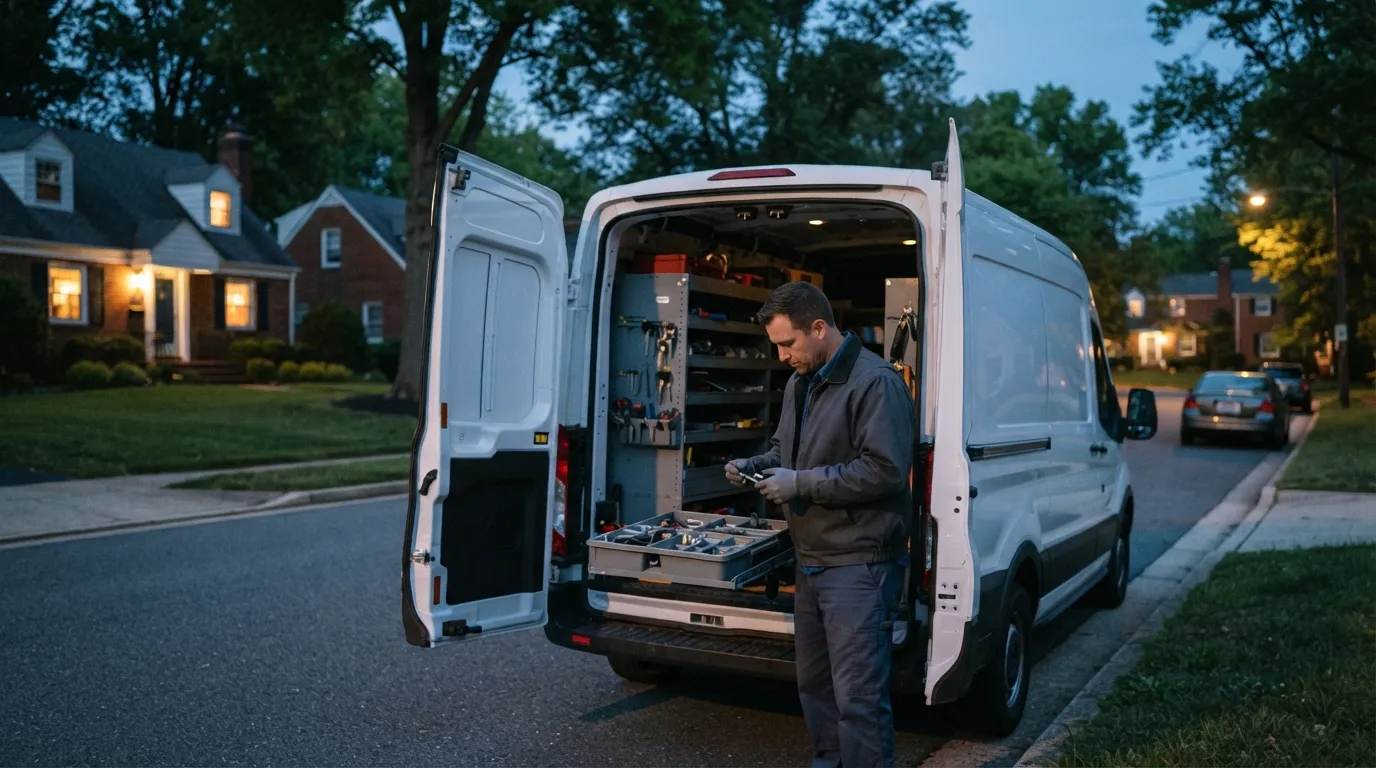
How to compare emergency quotes quickly and safely
When you need a locksmith in an emergency you have to balance speed against cost and the risk that the cheapest option uses destructive methods without warning. The research brief and planning notes say customers want a fast, pragmatic way to weigh response time against total cost; use the written quote to do exactly that.
First, get the same basic information from every caller: the total price, whether an attendance or call‑out fee applies, what is included in labour and parts, and whether non‑destructive entry will be attempted first. If you have two quotes and one lists an attendance fee while the other bundles attendance into a higher labour charge, you can add the line items up in your head to get a real apples‑to‑apples comparison.
Second, treat non‑destructive versus destructive as a separate risk question. A quote that states explicitly that non‑destructive entry will be attempted first gives you the assurance you need about method; a quote that makes drilling a baseline option should be treated with caution unless the technician can show clear evidence that non‑destructive methods will not work. The positioning notes for this topic observe that few pages explain when irreversible methods are genuinely required, so asking for that statement on the quote is what makes an emergency offer comparable.
Third, judge arrival time as part of the offer, not separately. A faster arrival can be worth paying more for in a true emergency, but it should appear on the estimate as an attendance or priority response charge so you can see what you are paying for. The research brief cautions against promising exact local arrival times, so use the quote to fix the commitment a provider is willing to make rather than relying on a verbal promise.
Fourth, check what happens if the technician finds more damage on site. Emergency situations commonly expose hidden problems; a clear quote will list how follow‑on repairs or replacement parts will be handled and whether those costs are estimates only until the tech can confirm on site.
Finally, when you are under time pressure, use the written quote as your decision tool. Ask the caller to send the estimate by text or email before they start work; even a short written message that lists the same line items you asked for will make it far easier to compare offers and to avoid a last‑minute change in scope that raises the bill.
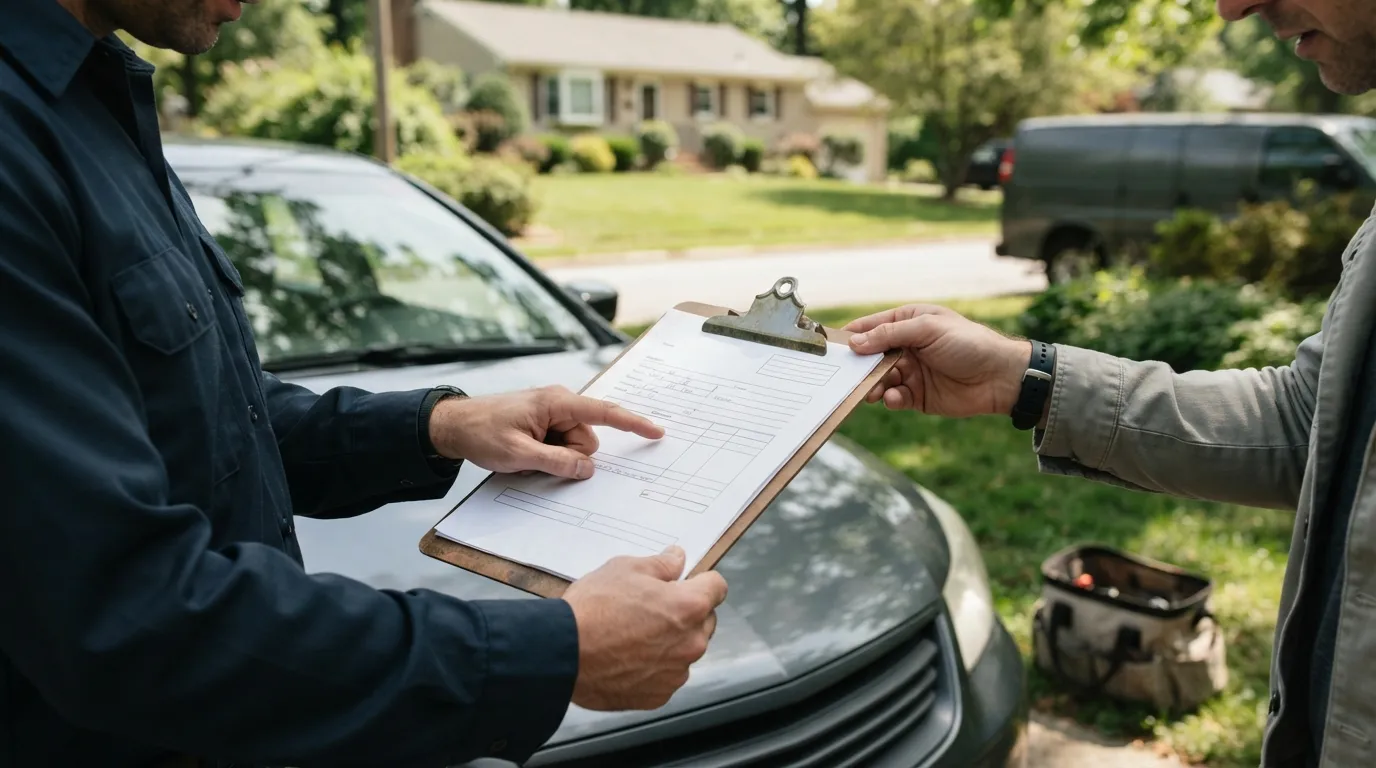
What typically happens on arrival and what to check first
When a locksmith turns up, there are a few practical checks you can make before any work begins. The planning notes for this article emphasise that verifying identity, vehicle and the written quote should be routine.
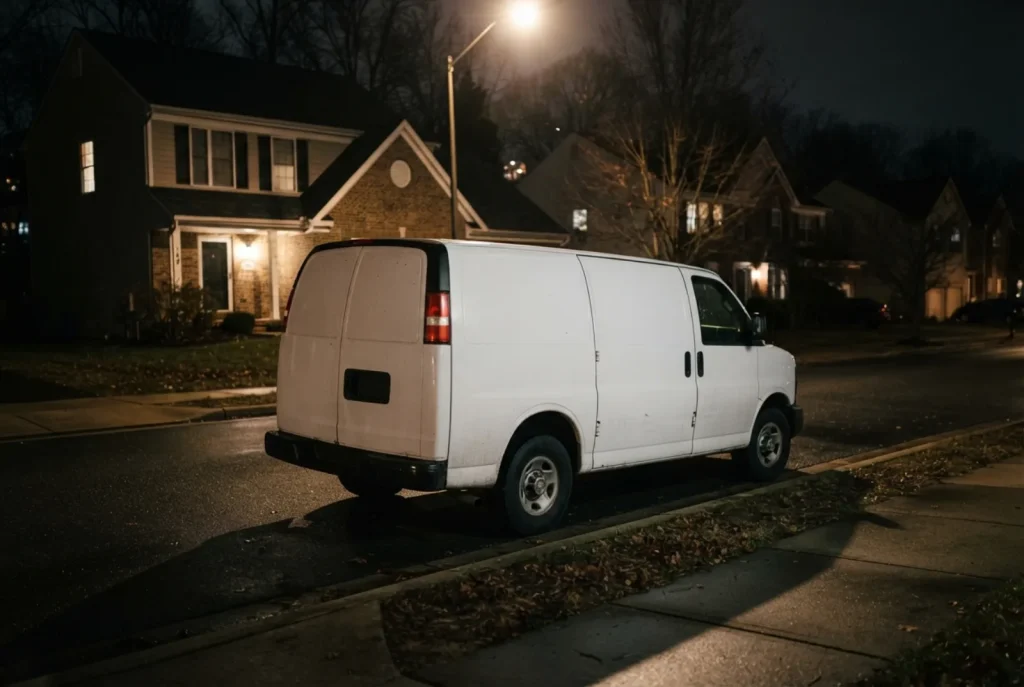
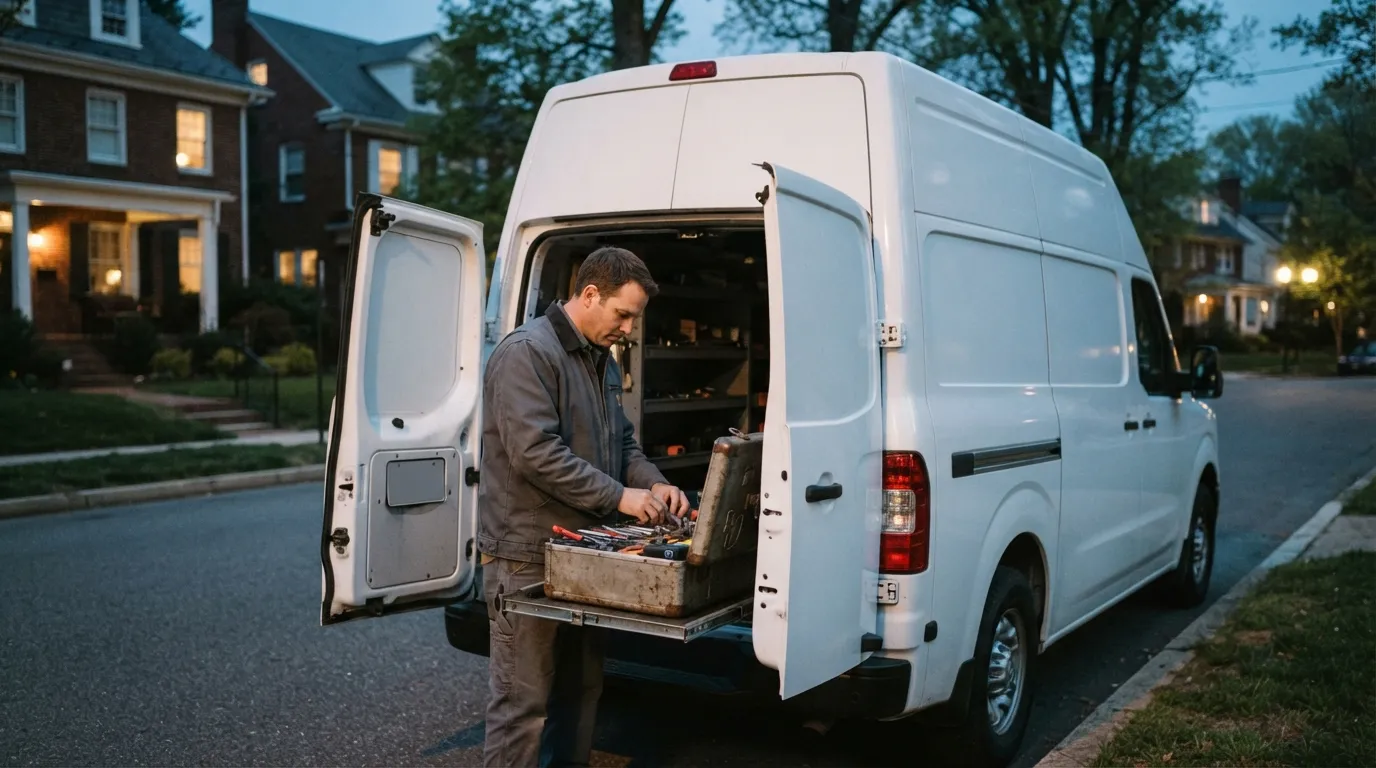
Ask to see identification and a company card or reference; treat these as prompts to confirm the person who called you is the person at your door. Check the vehicle: a marked mobile van or a clearly equipped service vehicle with visible tools indicates a mobile operation rather than a casual visit, and the vehicle registration or van signage helps you match the technician to the booking when you call the company back.
Present the written quote and confirm that the items on the document match what the technician says they will do. If the technician proposes extra work that is not on the quote, ask for a revised written estimate before you consent. The plan for this piece highlights that customers should insist that changes be put in writing so they do not end up authorising open‑ended extras at the door.
Check the expected arrival time against the time on the quote and the clock. If the technician’s arrival was part of the quoted service, note whether the company met the agreed window; this becomes relevant if you later query response behaviour or charges.
Finally, have a quick look at the tools the technician brings and the first method they propose. If they explain they will try non‑destructive entry before any irreversible step, that matches what you should have demanded from the quote. If they immediately propose drilling without first explaining why non‑destructive methods are impossible, stop and ask them to document that reasoning in writing before proceeding.
A simple written‑quote template you can ask for
If you want a copyable minimum that makes offers comparable, ask the locksmith to supply a short document containing the fields below. The research brief and positioning notes emphasise that many published pages omit a clear, local sample of a written quote, so having a template to ask for remedies that gap.
| Field | To be completed by locksmith |
|---|---|
| Date | |
| Quote number or job reference | |
| Caller name and address | |
| Arrival ETA or scheduled time | |
| Brief description of the work and methods (include whether non‑destructive entry will be attempted) | |
| Labour: description and estimated time on site | |
| Parts: description and unit cost | |
| Attendance / call‑out / priority response fee (if any) | |
| Total price for the quoted work | |
| Payment methods accepted and payment terms | |
| Quote validity (expiry date) | |
| Technician name and signature |
Ask the locksmith to fill each field in and to sign or date the document. The left column lists the minimum fields that make two offers comparable and enforceable as a quotation rather than an informal estimate. Having the parts and attendance fee separated lets you match offers line for line, and the description of methods protects you from being surprised by a drilling decision that was not part of the original plan.
Rockville and Montgomery County: travel, response and coverage
Where you are in Rockville or elsewhere in Montgomery County affects how quotes are framed because travel and local call volume change response behaviour. The research brief warns readers not to rely on exact local arrival times without reference to traffic or call volume, and the local guidance this article provides is intended to explain how that reality shows up on a written estimate.
Technicians working across a county will often show attendance or call‑out fees on the quote to reflect travel time; when this fee appears as a separate line you can compare it to another provider who bundles travel into a higher labour rate. That is why the checklist above asks you to insist on attendance or call‑out being shown separately.
In busier towns or at peak times, providers will describe an arrival window rather than an exact minute, and the quote should record that window so you have a clear expectation. If you live in a part of the county where traffic or distance is known to slow response, the estimate should reflect it through either a stated ETA or an attendance fee rather than a surprise charge after the job is done.
If you are comparing offers for scheduled work rather than an emergency, ask each locksmith to quote for the same appointment window and the same scope of work; that way any travel or scheduling surcharge becomes a line item you can match. The planning material for this article stresses that local guidance about expected travel and response behaviour is a common gap on other pages, so using the written quote to capture arrival expectations solves that problem.
When in doubt, ask the caller to put the travel or priority details into the written estimate before they start. A short line that says “ETA: X–Y minutes” or “Attendance fee applies: yes/no” is all you need to make the offer comparable and to judge whether a faster response is worth a higher total charge.
Frequently asked questions
Can I get a firm written price before a locksmith starts work?
You can ask for a firm written price before work starts and the plan for this page recommends that you do; a written quote fixes what is included and what would be extra so you can compare offers fairly.
What should I ask a locksmith before hiring them?
Ask for a short written quote that lists the work, whether non‑destructive entry will be attempted, parts, labour, any attendance or call‑out fee, and the quote validity and payment terms so you can compare offers.
How do emergency call‑out fees compare to scheduled appointments?
Emergency offers should show any attendance or priority response fee as a separate line so you can add it to labour and parts to compare with scheduled appointments that may bundle travel into a different charge.
What do I do if I can’t afford a locksmith right now?
If cost is the issue, ask the caller to provide a written quote showing the breakdown of labour and parts so you can prioritise which repairs or replacements are essential and which can wait; having that list also lets you seek a second written offer for comparison.
How do I check the locksmith when they arrive?
Present the written quote and confirm the technician’s identity and vehicle, check that the methods on the quote match what they propose to do, and ask for any changes to be put in writing before you authorise additional work.